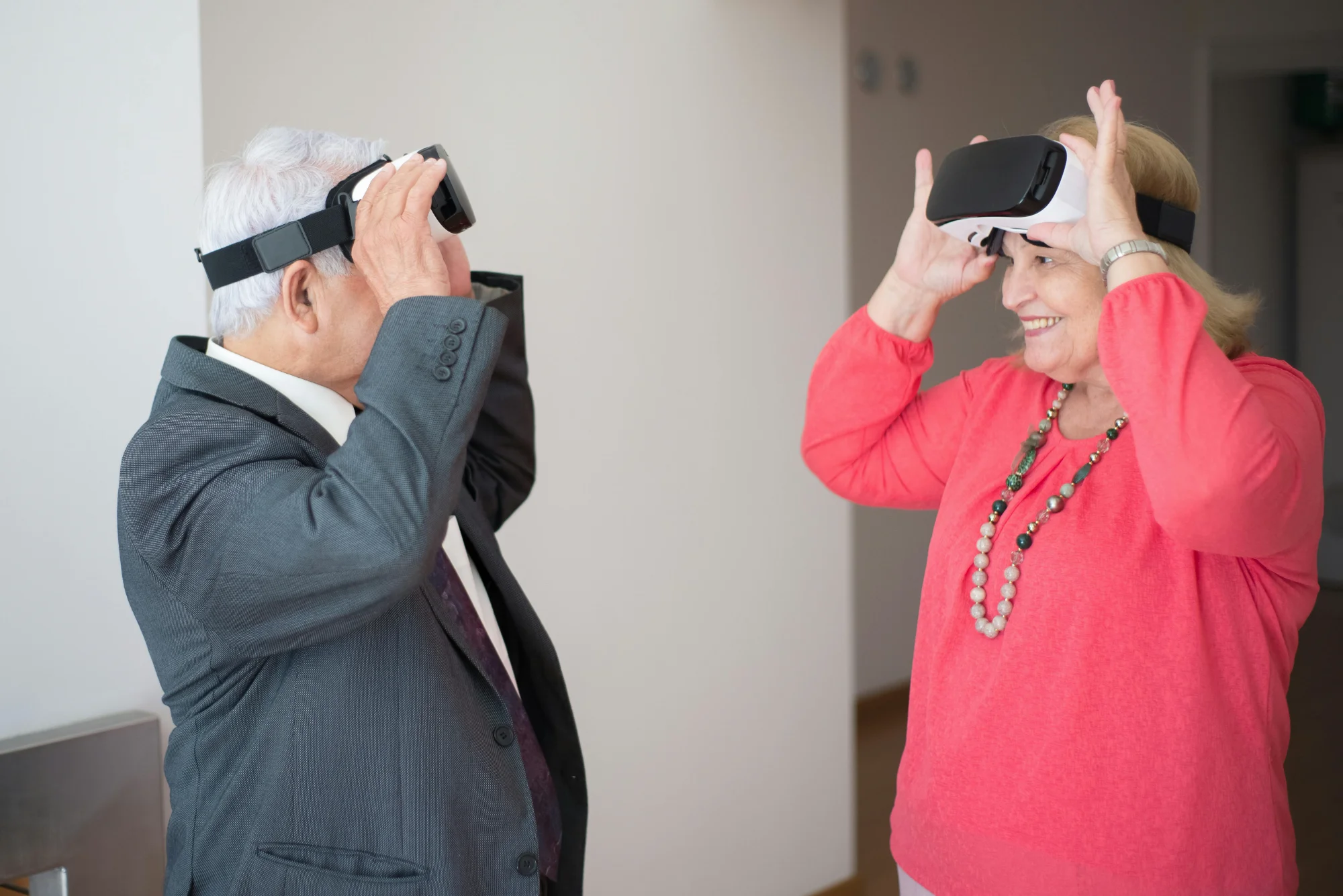
WE TALK ABOUT TOOLS. WORK HAS ALREADY CHANGED.
Over the past two years, artificial intelligence has become a central topic across organizations. The same questions keep surfacing: which tools should we adopt, how should we train our teams, and how can we accelerate adoption?
These questions are valid. Yet they are often built on a shared assumption: that AI is simply another tool, one that employees need to learn how to use effectively. This perspective is reassuring because it frames the transformation as something manageable and familiar.
However, it misses a deeper shift. What is changing today is not just the tools employees use, but the way work itself is structured and carried out.
THE REAL SHIFT: WE NO LONGER WORK ALONE
For a long time, work relied primarily on individual capability. Employees drew on their own knowledge, experience, and reasoning to analyze situations and make decisions.
Artificial intelligence introduces a fundamental change to that model. Increasingly, work is no longer performed in isolation but in interaction. Employees now refine ideas with AI, explore multiple options in seconds, and compare outputs before making decisions. The process of working becomes less linear and more iterative.
This transformation does not always appear dramatic. It unfolds gradually, embedded in everyday tasks. Yet it redefines how thinking and decision-making happen in practice.
A SIMPLE SCENE THAT SAYS IT ALL
Consider a familiar situation. A marketing manager needs to launch a campaign under tight deadlines, with limited information. Instead of relying solely on prior knowledge or structured processes, they open an AI tool, reframe the brief, test several directions, generate alternatives, and refine their approach.
Within minutes, they explore more possibilities than they would have in hours before but the key shift is not speed, it is how the work is done. The process becomes exploratory, iterative, and adaptive. Thinking no longer happens separately from action; it develops within it.
This moment is not recognized as training. There is no formal learning path or evaluation. And yet, it is precisely where learning takes place.
AND YET, WE STILL TRAIN THE SAME WAY
Despite this transformation, most organizations continue to respond in familiar ways. They focus on training employees to use AI tools: teaching prompt techniques, sharing use cases, and distributing best practices.
These initiatives are useful, but they only address part of the challenge. They assume that the primary issue is technical proficiency, when in reality it is behavioral.
Two employees can use the same tool and achieve very different results. The difference lies not in access to technology, but in how it is integrated into everyday work: how decisions are made, how outputs are interpreted, and how judgment is applied.
THE REAL ISSUE: THE QUALITY OF USAGE
In many organizations, AI is already widely used. However, it is often used individually and informally, typically for simple tasks such as writing, summarizing, or structuring information.
These uses are valuable and can generate immediate productivity gains. But they remain fragmented. They are not consistently shared, structured, or aligned across teams. Employees experiment on their own, develop habits independently, and build practices that may not scale or sustain over time.
As a result, a gap begins to emerge. Some individuals develop strong, effective usage patterns, while others remain at a superficial level. This gap is not driven by access to tools, but by the quality and maturity of usage.
SHIFTING THE QUESTION
To fully leverage AI, organizations need to rethink their starting point. The question is no longer simply how to deploy tools or train employees on their features.
Instead, it becomes: what kinds of practices do we want to see emerge across our teams?
This shift is significant. It requires organizations to move beyond tool adoption and focus on how work is actually performed: how decisions are made, how problems are approached, and how learning occurs within action.
WHAT LEADING ORGANIZATIONS ARE DOING DIFFERENTLY
Organizations that are making meaningful progress tend to share a common approach. Rather than treating AI as a separate initiative, they embed it into the fabric of work itself.
They begin with real situations: decisions to be made, processes to improve, tasks to rethink. From there, they observe how teams are already using AI and work to make those practices more explicit, more consistent, and more effective.
This is the approach taken by Complement. Instead of relying solely on top-down training or static content, Complement focuses on real-world usage. AI is used as a support for thinking, decision-making, and continuous improvement within actual work contexts.
The objective is not simply to teach employees how to use a tool, but to help them develop stronger, more consistent ways of working.
A SILENT BUT STRUCTURAL TRANSFORMATION
One of the reasons this transformation remains difficult to grasp is its subtlety. It does not always take the form of large-scale programs or visible initiatives.
Instead, it unfolds in small, everyday actions: in how people write, analyze, and make decisions. Over time, these incremental shifts accumulate, leading to a deeper and more structural change in how work is performed.
THE REAL QUESTION
Artificial intelligence is not just a question of adoption.
It raises a more fundamental issue: how do we want work to be done in the future?
References
McKinsey – The State of AI (2023)
OECD – AI and the Future of Work (2023)
Brynjolfsson & McAfee – The Second Machine Age