When One Cohort Learns at Different Speeds
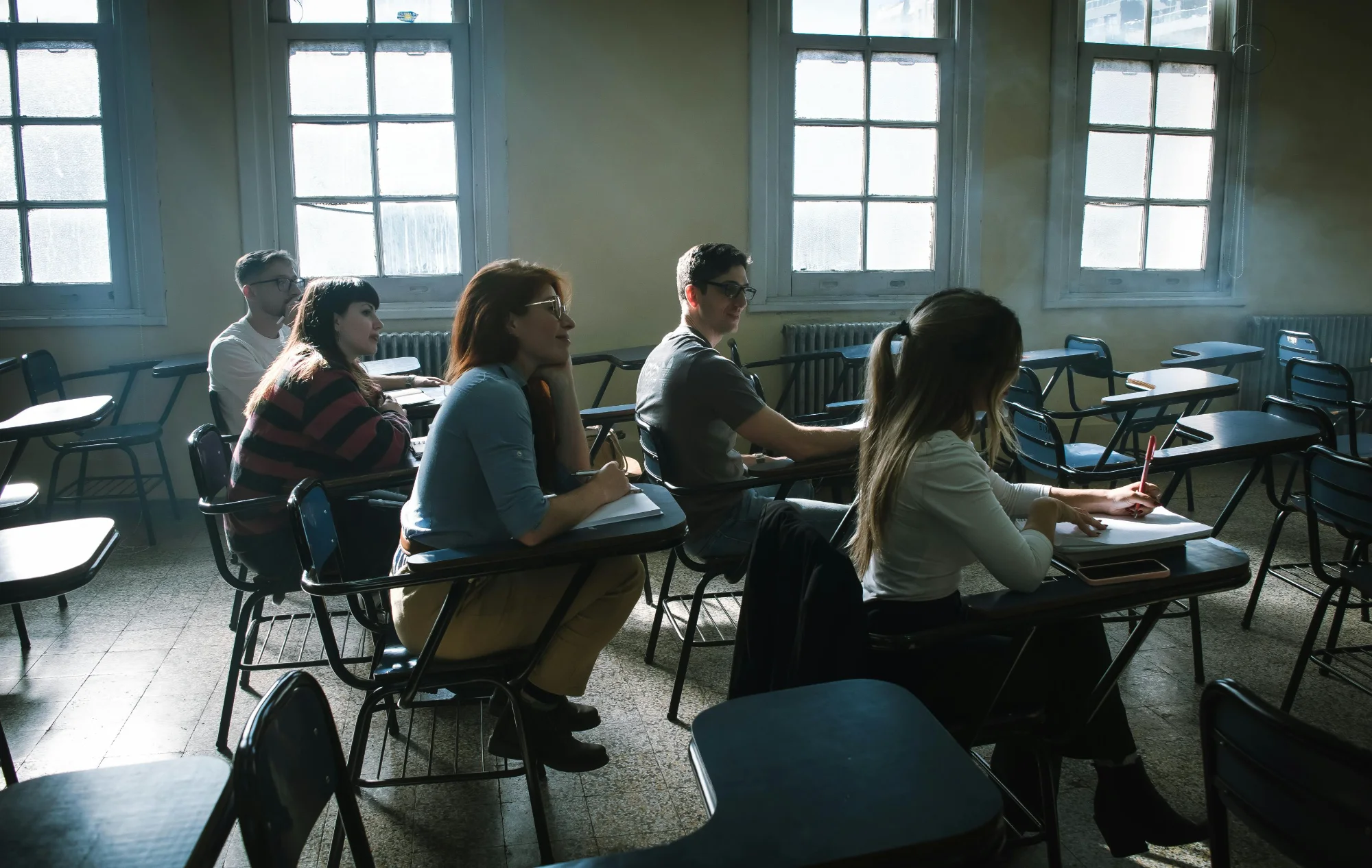
A lecturer finishes explaining a fundamental concept. Some students understood it several minutes ago and are already waiting for the next challenge. Others are still trying to grasp the prerequisite knowledge needed to follow the reasoning.
This situation is familiar to almost anyone involved in higher education.
It illustrates one of the most persistent pedagogical challenges facing universities today: how can institutions effectively support students who arrive with different levels of prior knowledge, learning habits, and academic preparation?
Behind a single cohort often lies a wide range of academic realities.
Some students enter university with strong foundations and extensive prior exposure to the subject matter. Others arrive with significant gaps in prerequisite knowledge. Some assimilate new concepts quickly, while others require additional practice, guidance, and feedback before they can progress confidently.
For educators and academic leaders alike, the question is no longer whether these differences exist. The challenge is how to design learning experiences capable of accommodating them.
The Limits of a One-Size-Fits-All Approach
Higher education has traditionally been built around a relatively simple model: one curriculum, one pace, and one learning pathway for an entire cohort.
This model offers clear organizational advantages. It ensures consistency across programs and allows institutions to deliver education at scale.
However, it also assumes a degree of learner homogeneity that is increasingly difficult to sustain.
Student populations have become more diverse. Educational pathways have multiplied. Access to higher education has expanded. As a result, variations in academic readiness have become more pronounced.
For some students, this creates a lack of challenge. They progress through introductory material with ease and may quickly lose interest when faced with concepts they already understand.
For others, the opposite occurs. Weaknesses in prerequisite knowledge can make new concepts increasingly difficult to grasp, causing learning gaps to widen over time.
The same learning experience can therefore become simultaneously too easy for some students and too difficult for others.
Hidden Learning Gaps: A Major Driver of Academic Underperformance
One of the most significant challenges in higher education is that learning difficulties are not always immediately visible.
A student may attend lectures, participate in seminars, submit assignments, and still struggle with fundamental misunderstandings that remain undetected for weeks or even months.
These hidden learning gaps are particularly problematic in cumulative disciplines such as mathematics, computer science, engineering, economics, and the natural sciences.
In these fields, new concepts build upon previously acquired knowledge. When foundational understanding is incomplete, students often encounter increasing difficulties as the curriculum progresses.
Academic failure rarely occurs suddenly.
More often, it emerges gradually as small gaps accumulate into larger barriers to learning.
For institutions seeking to improve student success, identifying these gaps early is becoming increasingly important.
Advanced Students Face Challenges Too
Discussions about student success often focus on struggling learners. Yet highly prepared students can also be underserved by traditional instructional models.
When students repeatedly encounter content they have already mastered, learning can become passive. Cognitive engagement decreases, curiosity declines, and opportunities for deeper learning are lost.
Research in educational psychology consistently shows that learning is most effective when learners are challenged at an appropriate level. Activities that are too difficult generate frustration. Activities that are too easy generate disengagement.
Supporting student success therefore requires more than preventing failure.
It also requires creating opportunities for advanced learners to continue developing their knowledge and skills.
Why Adaptive Learning Is Gaining Attention
As universities seek to address increasingly diverse student populations, adaptive learning has emerged as a promising approach.
Rather than requiring all students to follow exactly the same path, adaptive learning systems continuously adjust learning experiences based on student performance, responses, and demonstrated mastery.
When a learner struggles with a concept, additional explanations, practice opportunities, or remedial activities can be introduced. When a learner demonstrates proficiency, they can move more quickly toward advanced applications, complex scenarios, or higher-order thinking activities.
The goal is not to simplify education. The goal is to make learning more relevant and effective for each individual student.
By aligning instructional experiences more closely with learner needs, adaptive learning helps institutions address both under-preparation and under-challenge simultaneously.
A Practical Example
Consider an introductory programming course.
Within the same classroom, some students may already have coding experience through previous coursework or personal projects. Others may be encountering programming concepts for the very first time.
In a traditional instructional model, all students progress through identical activities.
The more experienced learners may become disengaged as they revisit familiar material. Meanwhile, novice learners may struggle to keep pace as concepts become increasingly complex.
An adaptive approach creates a different experience.
Students who demonstrate mastery of foundational concepts can move toward more sophisticated problem-solving activities. Those requiring additional support can spend more time strengthening core competencies before progressing further.
The learning objectives remain the same.
The pathway to achieving them becomes more responsive to individual needs.
The Complement Approach: Personalization at Scale
This challenge sits at the heart of Complement's approach to learning design.
Through adaptive learning mechanisms, the platform helps institutions identify both areas of mastery and areas requiring further development.
Students engage with contextualized exercises, realistic scenarios, and personalized feedback that evolve according to their performance and learning needs.
When gaps are detected, targeted remediation activities help reinforce foundational knowledge before learners move forward. Conversely, students demonstrating strong mastery can access more advanced challenges that encourage deeper understanding and skill development.
This approach enables universities to support increasingly diverse cohorts without requiring educators to create and manage multiple parallel learning pathways manually.
The objective is not to replace teaching.
It is to provide students with more personalized support while helping institutions improve learning outcomes at scale.
Rethinking Equity in Higher Education
As higher education continues to diversify, institutions face growing pressure to support students with increasingly varied academic backgrounds.
This reality challenges traditional assumptions about how learning should be structured.
Educational equity does not necessarily mean providing every student with exactly the same experience. Rather, it means providing each learner with the support, challenge, and opportunities they need to achieve the same academic objectives.
Adaptive learning represents one possible path toward this vision.
Not because it standardizes learning more effectively, but because it acknowledges that meaningful learning often requires different students to follow different routes toward the same destination.
The Real Question
The question facing higher education is no longer how to deliver the same content to every student. It is how to ensure that every student can successfully progress from their own starting point without holding back those who are ready to move further, faster.